Enzymes for Corn Gluten Recovery and Protein Stream Handling
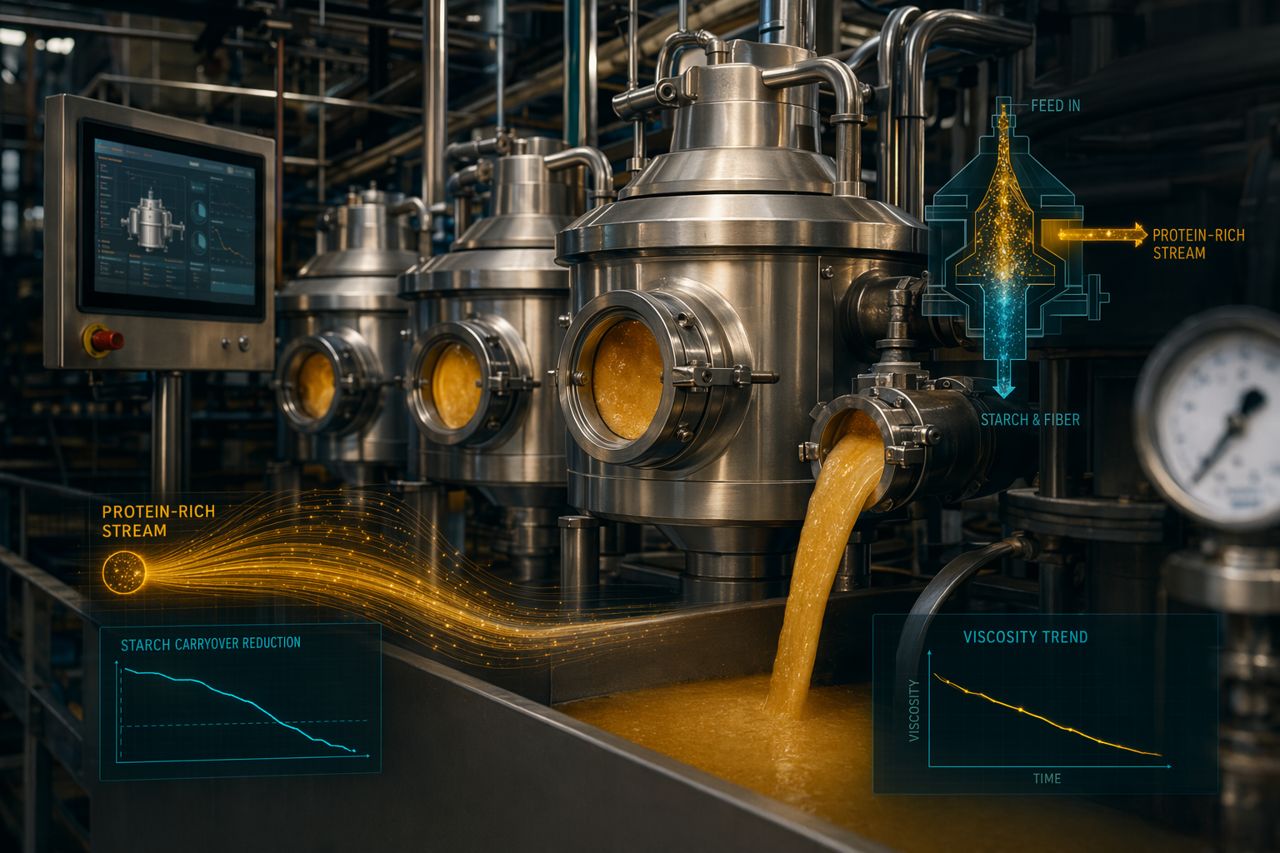
Corn gluten recovery is shaped by more than one separation step. Steep performance, grind condition, fiber release, starch carryover, viscosity, centrifuge loading, and evaporation behavior all influence how reliably a plant can concentrate and handle protein-rich streams.
Mazerun supplies enzyme solutions for corn wet mills that need practical support around gluten yield, coproduct quality, and continuous-operation stability. As an enzyme supplier for corn wet milling, we focus on fitting enzyme use into real plant constraints: residence time, pH and temperature windows, existing dosing points, QA documentation, and the operating discipline required in a 24/7 mill.
Our role is to help process teams evaluate where enzyme treatment can improve separation behavior, reduce stream handling friction, and support more consistent gluten recovery without creating unnecessary complexity for operators.
Where enzymes can support gluten recovery
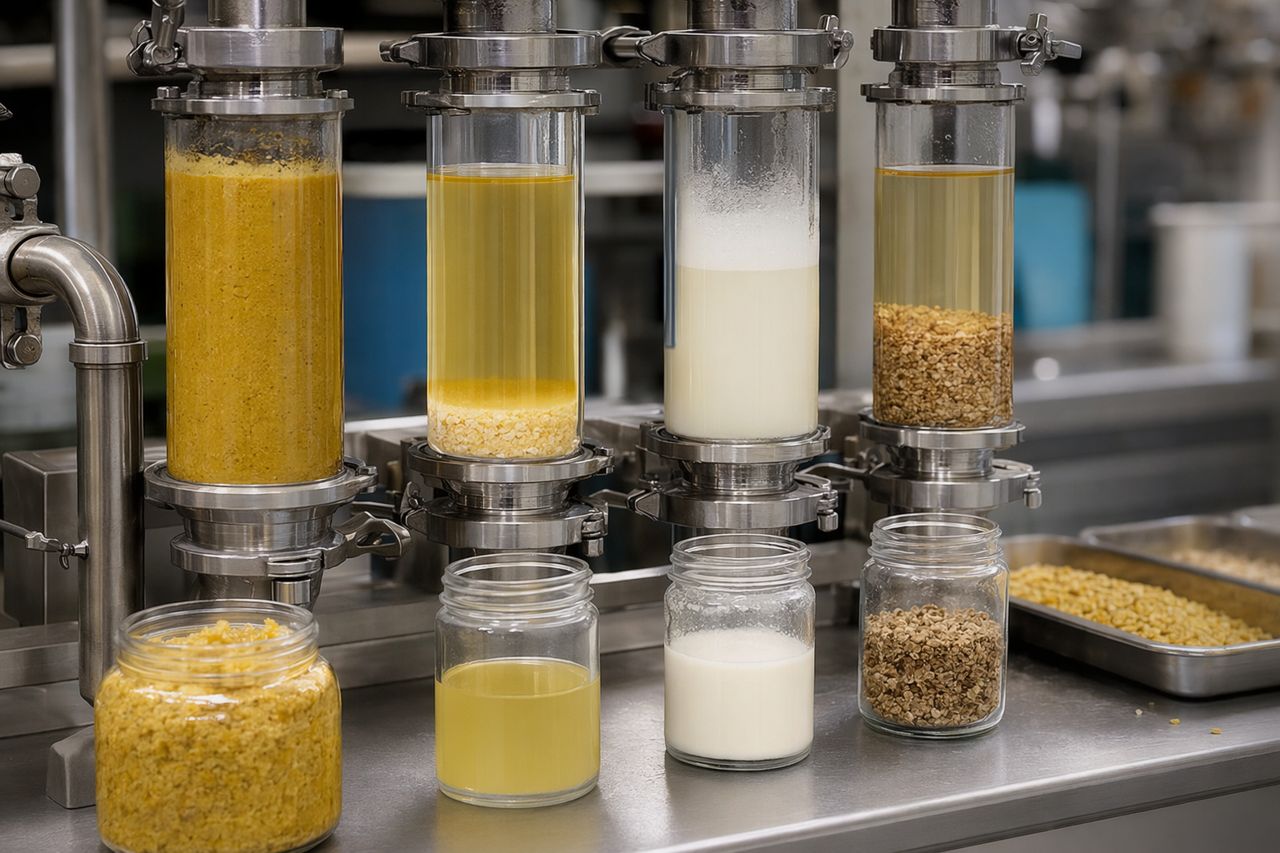
In a corn wet mill, protein recovery depends on clean liberation and efficient separation. Enzymes may be used to support upstream and midstream conditions that affect how starch, protein, fiber, and solubles move through the plant.
Potential objectives include:
- Supporting cleaner release of starch and protein from the kernel matrix
- Reducing viscosity in selected process streams
- Improving flow through screens, filters, and centrifuge feed systems
- Reducing starch carryover into gluten-rich fractions
- Supporting more consistent gluten concentration and dewatering behavior
- Helping protein-rich streams move more predictably into drying or coproduct handling
- Improving operating margin when corn quality, grind profile, or steep conditions vary
Mazerun helps plants select enzyme approaches based on the specific bottleneck rather than applying a generic product recommendation.
Practical fit for corn wet mill operations
Steep, grind, and release conditions
Changes made early in the process can affect downstream gluten recovery. If steep performance or grind profile leaves protein bound with starch or fiber, separation equipment may carry a heavier load. Enzyme treatment can be evaluated as part of a broader release strategy, especially where the plant is seeing inconsistent fractionation, higher recirculation, or elevated solids in the wrong stream.
Viscosity and stream mobility
High-viscosity process streams can reduce separation efficiency, increase pumping difficulty, and create unstable feed conditions for screens, centrifuges, filters, or evaporators. Mazerun enzyme programs can be assessed for targeted viscosity reduction where process data shows that stream mobility is limiting recovery or throughput.
Gluten concentration and dewatering
Protein-rich streams need predictable behavior. When separation is inconsistent, downstream dewatering and drying can become harder to control. Enzyme optimization may help improve the way gluten streams concentrate, drain, and move through the plant, supporting a more stable coproduct profile.
Common plant signals that justify an enzyme review
A corn wet mill may benefit from an enzyme evaluation when operators are seeing:
- Variable gluten recovery across shifts or corn lots
- Higher-than-expected starch in protein-rich fractions
- Protein stream viscosity that limits flow or separation
- Increased centrifuge loading or unstable separation performance
- Filter or screen blinding connected to stream condition
- Gluten dewatering that becomes inconsistent under normal operating changes
- Coproduct quality variation that affects customer acceptance or drying economics
- Need for a trial-supported alternative before making mechanical changes
The best starting point is usually a short review of process conditions, current pain points, and the plant’s target improvement. From there, Mazerun can suggest a focused trial plan.
Enzyme program considerations
Mazerun does not approach gluten recovery as a single-product problem. The appropriate enzyme route depends on the material being treated, the location of the dosing point, the residence time available, and the operating window the plant can reliably maintain.
Key evaluation points include:
- Target stream and process stage
- Desired effect on release, viscosity, separation, or filtration
- Compatibility with existing pH and temperature conditions
- Residence time and mixing quality at the proposed dosing point
- Impact on downstream centrifuges, filters, evaporators, dryers, and coproduct handling
- QA, documentation, and traceability requirements
- Trial scale, sampling plan, and decision criteria
This process-first approach helps reduce trial ambiguity and gives engineering, production, and quality teams a clearer basis for decision making.
Trial support for continuous plants
Corn wet mills rarely have the luxury of stopping the process for extended testing. Mazerun supports trials designed around operating continuity, practical sampling, and measurable plant outcomes.
A typical evaluation may include:
- Process review — current flow path, bottleneck, target stream, and operating window
- Product recommendation — enzyme type and dosing concept matched to the process objective
- Trial plan — dosing point, observation period, sampling approach, and control comparison
- Performance tracking — viscosity, separation behavior, starch carryover, filtration response, gluten concentration, and coproduct handling observations
- Adjustment logic — practical guidance for refining dose, timing, or application location
- Documentation — product information and quality documentation to support internal review
The goal is to help the plant determine whether enzyme treatment delivers enough operational value to justify adoption.
Built for protein stream handling, not just yield claims
Gluten recovery value is not only measured at one point in the process. A successful enzyme program should support the way protein-rich material behaves through separation, concentration, dewatering, drying, and coproduct logistics.
Mazerun works with plants that care about:
- Recoverable protein value
- Separation efficiency
- Reduced starch contamination in gluten fractions
- More stable protein stream viscosity
- Better filtration and dewatering behavior
- Fewer process upsets connected to stream condition
- Operating consistency across corn quality variation
- Clear technical support before and during plant trials
Request a quote
If your corn wet mill is reviewing gluten recovery performance, protein stream viscosity, or coproduct consistency, Mazerun can help assess whether an enzyme program is technically appropriate.
Use the on-site request a quote form to share your process target, current bottleneck, and preferred trial timeline. A Mazerun technical representative will review the application and respond with a practical recommendation.